01
CSA Safety Performance
Understand your safety data and build an improvement plan around your operation.
Explore service: CSA Safety PerformanceCarrier safety & compliance training
Roadside Inspection Violations & DataQs Assistance
Driving Compass provides individualized roadside inspection review and DataQs assistance for commercial drivers, owner-operators, and motor carriers.
A clearer picture
From inspection to informed action.
A review starts with the facts.
Beyond the roadside
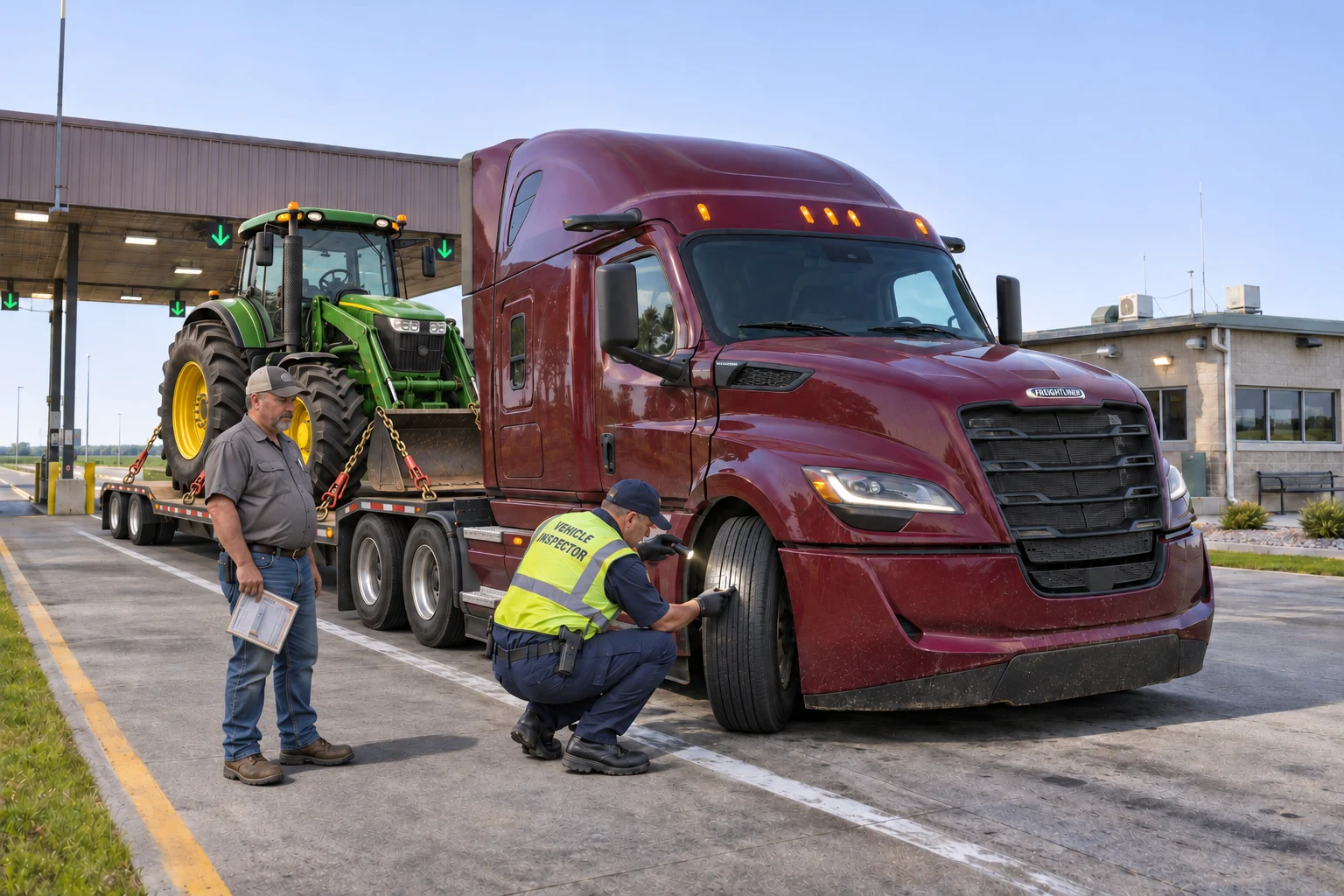
Roadside inspections are a routine part of commercial transportation. However, violations recorded during an inspection can have consequences extending far beyond the inspection itself.
Even when an officer issues no traffic ticket or fine, violations documented on a Driver/Vehicle Examination Report (DVER) may enter federal safety databases and affect a motor carrier’s Safety Measurement System (SMS) results or a driver’s Pre-Employment Screening Program (PSP) report.
Roadside inspection violations may negatively affect SMS BASIC measures and contribute to higher safety percentiles.
An unfavorable safety history may influence insurance underwriting, premiums, and how potential customers or freight brokers evaluate a carrier. This can increase costs while limiting business opportunities.
Repeated violations and unfavorable safety performance may increase exposure to FMCSA interventions.
A history of violations can raise concerns about a carrier’s safety management practices and may trigger an audit.
Reportable roadside inspections and their violations may appear on PSP reports used by prospective motor carrier employers.
Repeated violations or serious inspection findings may influence a carrier's hiring and driver qualification decisions.
Certain violations can result in an immediate prohibition on continued operation until the applicable conditions are satisfied.
Start with accuracy
Not every recorded violation is necessarily accurate.
An inspection report may contain incorrect information, improperly classified violations, duplicate entries, or findings that are not supported by the available facts.
An officer's observations, the applicable regulations, and the evidence are all important when determining whether an inspection record is accurate.
An inaccurate violation should not go unexamined simply because it appears on an official inspection report.
How Driving Compass can help
Our approach begins with understanding the inspection, reviewing the applicable federal safety regulations, and examining the available supporting evidence.
We don't submit disputes based on assumptions. We assess the reported findings and identify whether there is a reasonable, documented basis to request a review.
We examine your Driver/Vehicle Examination Report (DVER), identify recorded violations, and review the regulatory provisions cited by the inspecting officer.
We assess the reported facts against relevant FMCSA regulations and available documentation to identify potential errors, inconsistencies, or misapplications.
Depending on the violation, we can review relevant documents and records, including dash-cam footage, photographs, maintenance records, inspection reports, electronic logging device (ELD) information, vehicle specifications, and other supporting materials.
When sufficient grounds exist for a review, Driving Compass can prepare and submit an appropriate Request for Data Review, with the necessary authorization and available supporting documentation.
We assist with monitoring the request, responding to administrative inquiries, providing additional supporting information, and tracking the reviewing agency's determination.
Following the agency's determination, we can review the available inspection and FMCSA safety records to verify whether any approved changes have been reflected.
Depending on the violation, relevant supporting materials may include:
Beyond the courtroom
If a traffic citation was issued in connection with a roadside inspection, a favorable court outcome may qualify for special treatment under FMCSA's adjudicated-citation policy.
With proper court documentation, Driving Compass can assist with a DataQs request to have an eligible adjudicated outcome reflected in the associated federal inspection record.
A ticket resolved in court does not mean that the corresponding federal safety record has been updated.
What you receive
A review of your inspection report and the specific violation or data entries you wish to question, with an explanation of the identified concerns and potential review options.
Assistance identifying, collecting, and organizing relevant supporting records needed to substantiate your request.
When a review is appropriate and within the agreed service scope, a clearly structured Request for Data Review supported by relevant factual and regulatory information.
Assistance monitoring the review process, communicating with the reviewing agency on authorized matters, and responding to requests for additional documentation.
An explanation of the reviewing agency's determination, any recorded corrections, and the potential implications for the relevant federal safety records.
Your records, organized
Access your inspection reports, supporting documents, submitted requests, correspondence, and service updates through your password-protected Driving Compass client portal.
Your records remain organized and accessible in your account, making it easier to retrieve information for future reference.
Stored inspection reports also form part of a driver’s professional history. When changing employers, drivers can retrieve retained records that may help document their experience for a prospective motor carrier.
Related services
Understand your safety data and build an improvement plan around your operation.
Explore service: CSA Safety PerformancePersonalized administrative support, attorney coordination, and organized records.
Explore service: Traffic Ticket AssistanceLive, practical instruction built around the needs of your drivers and your fleet.
Explore service: Driver Safety TrainingWhether you are an individual commercial driver concerned about your professional history or a motor carrier working to improve safety performance, Driving Compass can help you identify questionable inspection findings and navigate the DataQs review process.